


SEO · Tracking · Analysis
Be Found – technically clean, content-strong
Search engine optimization is not a bag of tricks. It is the combination of fast technology, clear content, complete meta-data, and measurable analysis. Those who neglect their own website lose out to competitors – in Google, in link previews, and increasingly in AI systems.
This page bundles our understanding of SEO, Open Graph, structured data, and web analytics – including our professional analysis tool.
What SEO Means Today
SEO (Search Engine Optimization) means: building your website so that people and machines immediately understand what it's about – and why you are the better answer to a search query.
Google no longer just evaluates "old pages with many keywords". Key factors include:
Load time, Mobile, HTTPS, clean URLs, Core Web Vitals
Clear structure, unique texts, matching search intent
Structured data, reviews, internal and external links
In parallel, AI search and LLMs are gaining importance. Those who provide clean meta-data, Schema.org, and an understandable page structure will also be better interpreted there.
Technical SEO – The Foundation
Without solid technology, even the best text helps little. We routinely check these points during audits and relaunches:
- Core Web Vitals – LCP, INP, CLS; images with fixed dimensions, minimal render-blocking CSS/JS
- Mobile First – responsive layout, readable font, tappable elements
- HTTPS & Clean URLs – no parameter soups, consistent permalinks
- Sitemap & Indexing – XML sitemap, robots.txt, Search Console without critical errors
- Canonical & Redirects – one main URL per content; 301 for moves; meaningful 404 page
- Caching & Hosting – fast server, effective page caching (e.g., WP Rocket or WP Super Cache)
Tools: PageSpeed Insights, RankMath Pro, Google Search Console – and our Culoca SEO Tool for meta-data and structured markup.
Content & Structure
Write for people – but structure for machines. Our basic rules:
- One H1 per page – clear page title; H2/H3 structure the topic
- Unique Title & Meta Description – strong click-through in SERPs, not duplicated
- Meet search intent – the page answers the user's question
- Internal linking – connect important pages; no dead ends in the menu
- Images – compressed, descriptive filenames, alt texts where they provide information
- Timeliness – broken links, outdated texts, and empty pages harm the overall impression
In WordPress, we typically manage meta-data with Rank Math – per page title, description, schema templates, and sitemap integration.
Open Graph & Link Preview
When someone shares your URL – on WhatsApp, LinkedIn, email, or in AI responses – Open Graph data determines whether the click happens or not.
og:title– concise preview titleog:description– short text that invites a clickog:image– proven: 1200 × 630 px, readable even when smallog:url– canonical page address
A website without complete OG data appears unprofessional when shared – and wastes reach. This applies regardless of whether you actively use social media.
With our plugin DIRSCHL Link Preview, we extract OG data, cache previews, and display reference galleries – the same technology behind professional link cards.
Structured Data (Schema.org / JSON-LD)
With JSON-LD, you describe additional facts to machines: companies, services, products, articles, events, images, FAQs, reviews. Google uses this for Rich Results – and AI systems for a more precise understanding of your content.
Typical errors: Schema is completely missing, contradicts the visible text, or is identically copied on every page. We use Schema specifically per page type and test with the Google Rich Results Test.
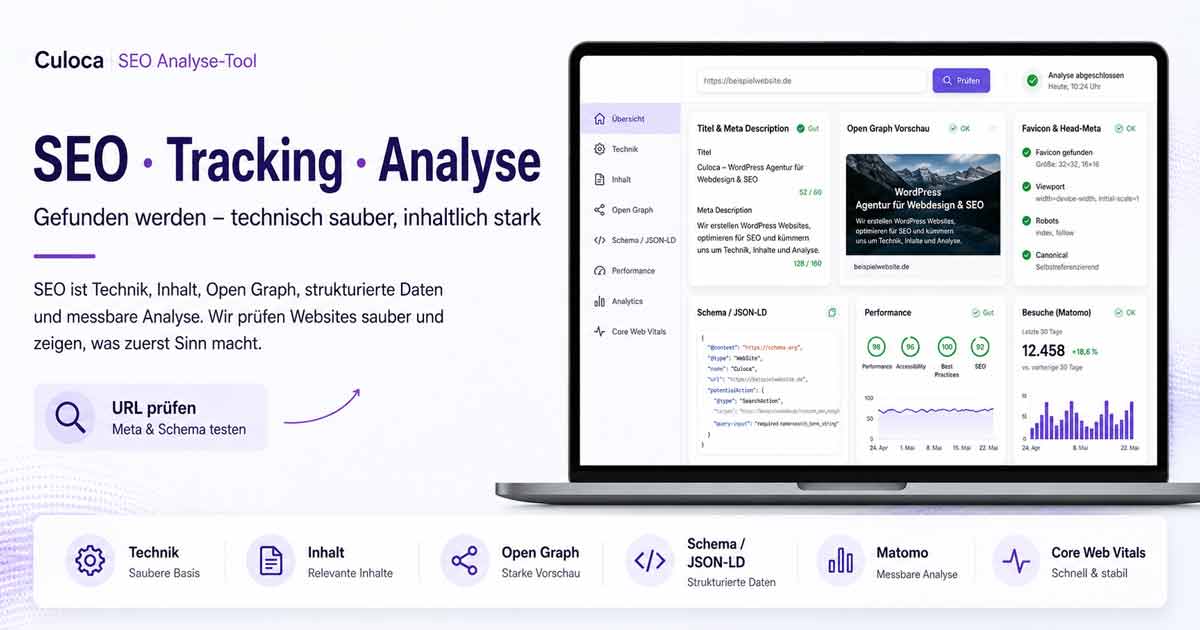
In the Culoca SEO Analysis Tool, you can see at a glance which JSON-LD blocks a URL delivers – including a bot mode that simulates Googlebot's behavior.
Culoca SEO Analysis Tool – Professional Testing
We built the SEO Analysis Tool on Culoca.com for real-world practice – not as a gimmick, but to quickly and thoroughly check URLs before they go live or are shared.
- Title, Meta Description, Canonical
- Open Graph & Twitter Cards
- JSON-LD / Schema.org
- Favicons & other Head Meta
- Bot Mode – simulates Googlebot for realistic SEO tests
- Performance-optimized for quick checks
- SSR output on Culoca – Meta & Schema work 100 %
- Suitable for Google, image search, social, email, and LLMs
Test your own page, compare competitors, check after deployments – in seconds instead of a tab-salad in DevTools.
Tracking & Analysis – Matomo instead of Data Black Box
SEO without measurement is guesswork. We rely on Matomo – privacy-friendly web analytics that you can host yourself or use as a cloud service. No obligation to Google Analytics; full control over visitor data and retention.
- Where do visitors come from? – Channels, campaigns, search terms (where available)
- What works? – popular pages, bounces, goals, and events
- Search Console + Matomo – link indexing and clicks in Google with on-site behavior
- GDPR in mind – cookie banner, anonymization, documented consent
For WordPress projects, we set up Matomo, link it with contact buttons or plugins (e.g., deep link from the Contact FABs click log), and show you which metrics truly improve decisions.
Why Many Are Overtaken in Google
We often see this with existing pages that haven't been structurally revised for years:
- Social media took off, the own website gathered dust
- Multiple H1s, thin texts, duplicate meta descriptions
- Slow mobile view, CLS due to images without dimensions
- No og:image – shared links appear broken
- No Schema, no Search Console – problems remain invisible
- Competitors with fresh content and clean technology pull ahead
Good news: This is usually manageable. Often, technical corrections, clearer page structure, and consistent meta-data are enough – no keyword stuffing.
SEO Checklist
Before launch or after a relaunch – these points should be solid:
- Every important page: unique Title and Meta Description
- Exactly one H1; logical H2/H3 hierarchy
- Content unique, helpful, matching search intent
- Core Web Vitals green or close (Mobile & Desktop)
- Images optimized; og:image 1200×630 where shared
- Canonical, redirects, 404 clean
- XML Sitemap submitted; Search Console without critical messages
- JSON-LD valid and matching page content
- Internal links to core pages; external links only where sensible
- Matomo (or similar) running; goals defined
Quick test for Meta & Schema: culoca.com/seo
What We Implement for You
- Technical check, content review, competitor comparison
- Prioritized action list – quick wins first
- Coordination with relaunch or ongoing support
- Rank Math, Sitemaps, Schema per page type
- og:image concept, Link Preview, Performance
- Matomo setup and instruction
Individual project or ongoing optimization – tailored to your goals, not a monthly report show.
SEO Check or Relaunch?
Test URL on culoca.com/seo – or send us the page. We'll tell you what makes sense first.