




Fake Tilt-Shift (Miniaturization in Film and Photography)
When we look at a model landscape, it's clear to us that it represents a specific scale. But why is that? If you compare different focal lengths (examples in Composition), you'll notice that depending on the focal length, with telephoto shots, objects in the foreground and background move closer to the focal plane, or they move further away with wide-angle shots. This effect is minimal in the normal focal length range between 35 and 70mm. This is precisely where our eye's field of vision lies.
If you were to compare a model landscape, for example, shot with a 50mm lens, to an identical section of a natural landscape, you would find that in the miniature, the background appears with significant blur. The reason for this is that the focal plane is now much closer to the lens, leading to a strong change in the distance of objects behind or in front of it.
The bokeh for objects close to the camera, also known from macro photography, always appears blurred in the background because they are focused by the eye and the lens in such a way that the background cannot be perceived. If you want to transfer this effect to photos, you must ensure that precisely this impression is created.
Additionally, the viewing angle can be crucial, as we usually expect a slight top-down view in model representations. Many miniatures also have enhanced color dynamics and contrast, which we primarily know from toys.
The reverse is also possible, of course, but then inevitably requires focus stacking. For example, to make a bee appear life-sized, it must be completely sharp, and the background should also be as sharp as possible. Here too, comparison options in the image help to reinforce this impression.
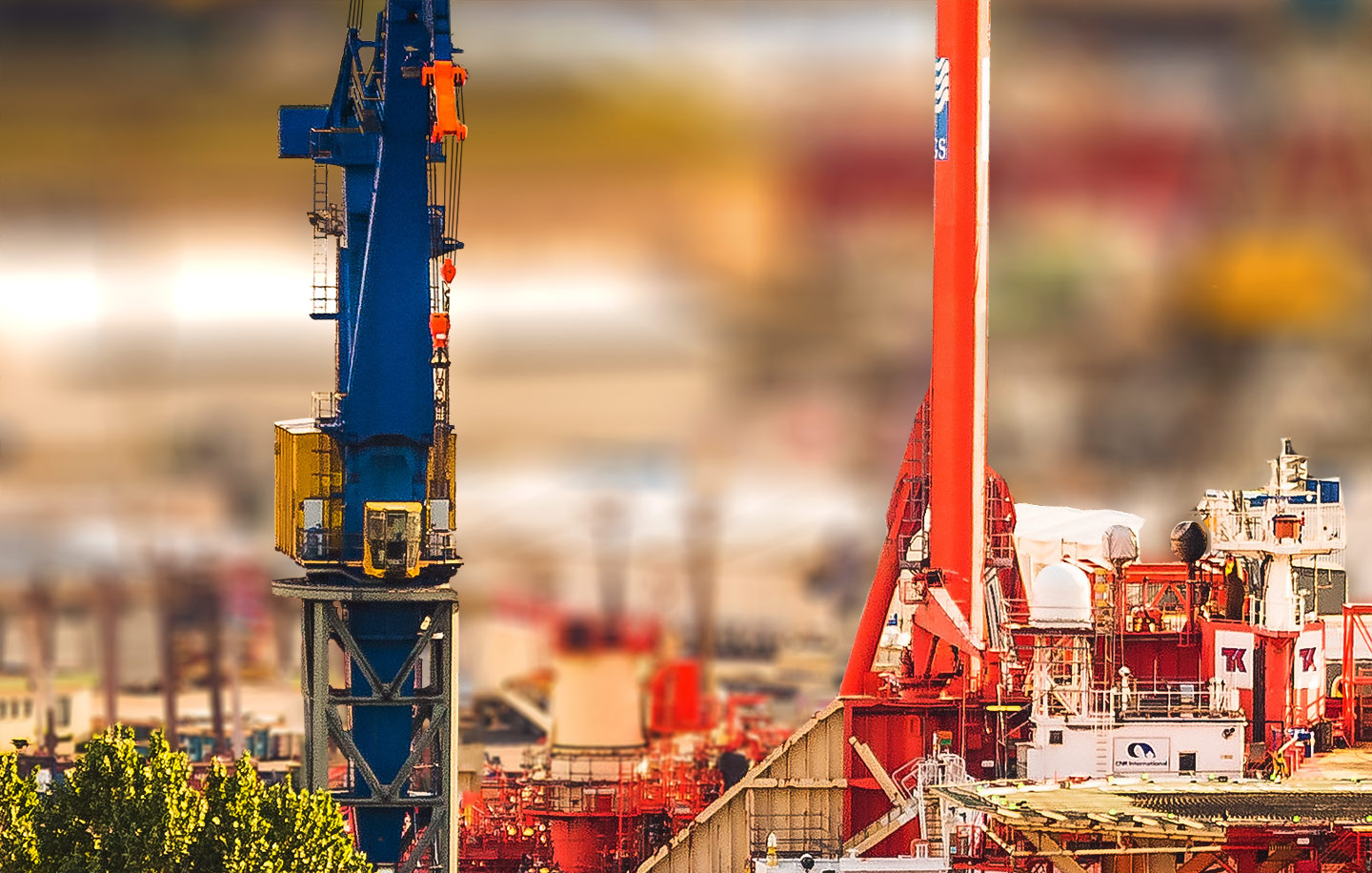
Hamburg-Elbe-17-Mini-Detail

Hamburg-Elbe-17-Mini-Detail_Original
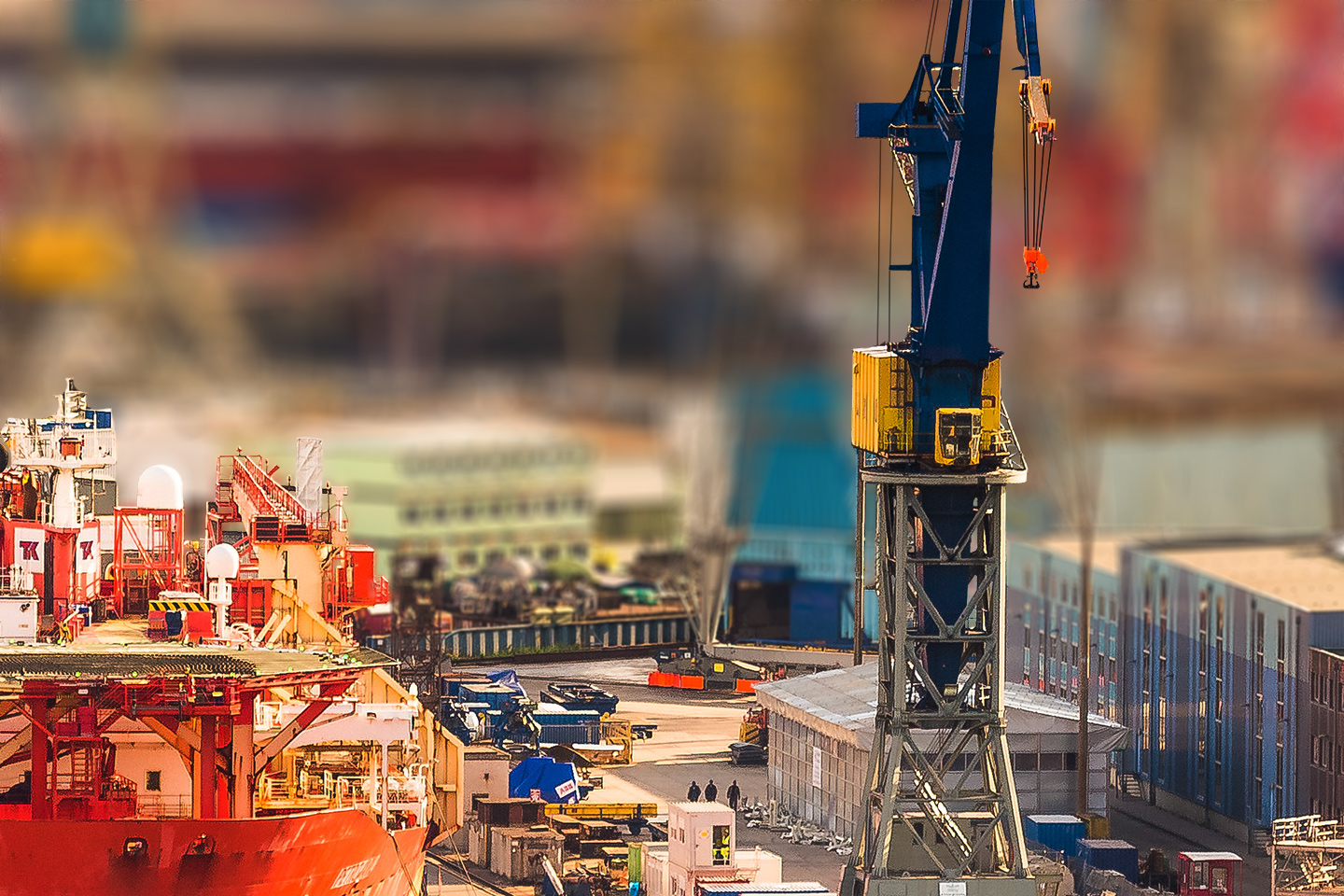
Hamburg-Elbe-17-Mini-Detail2

Hamburg-Elbe-17-Mini-Detail2_Original
Tilt-Shift or Fake Tilt-Shift
A tilt-shift lens allows the plane of focus to be tilted. This makes it technically possible to create a miniature impression without having to edit the images. This can be very helpful for film recordings. The best results will be achieved in the range around 50mm. In the wide-angle range, the bokeh in the background is usually insufficient to convey a good miniature impression.
True Miniature View
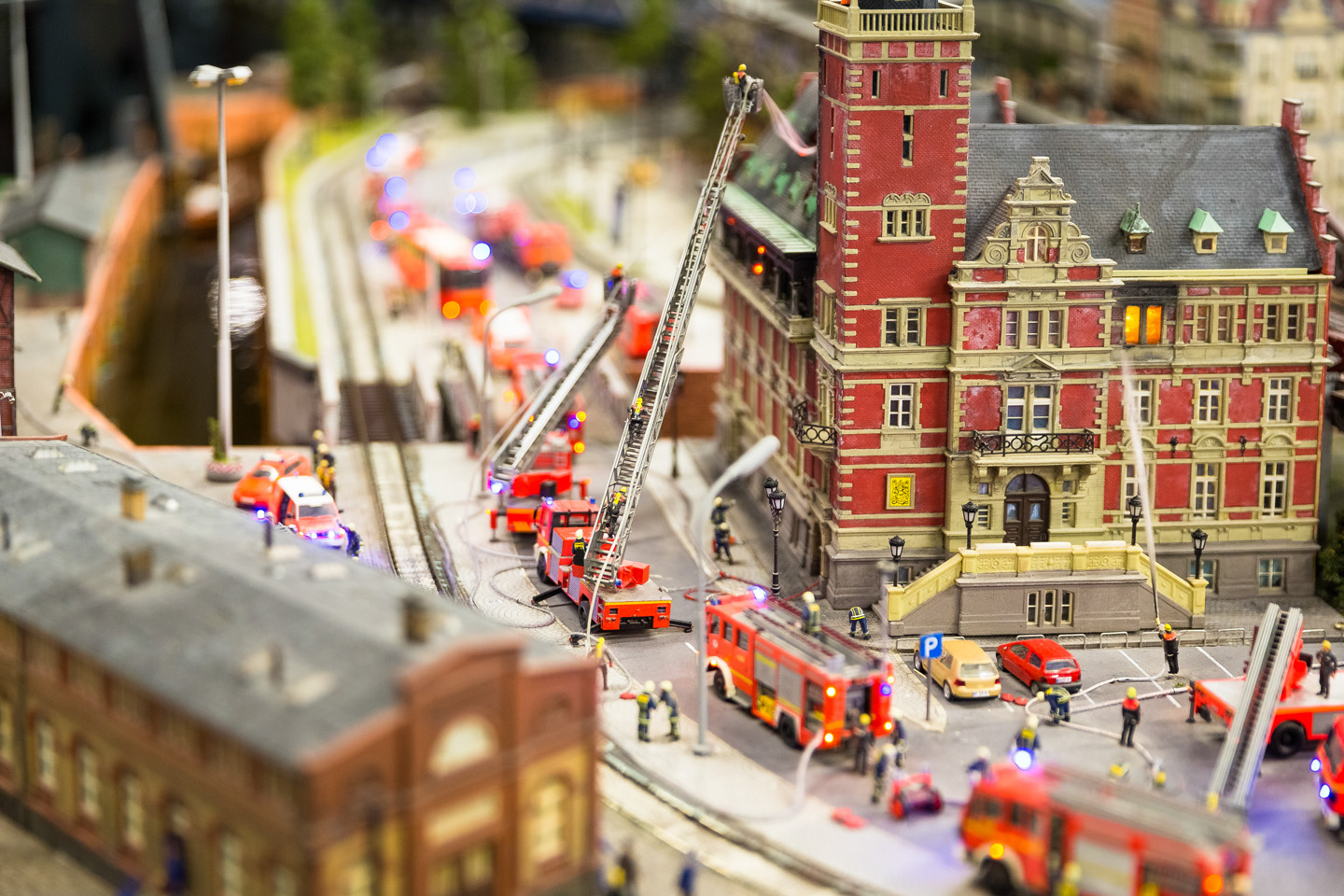
To understand what miniatures truly look like, it makes sense to examine such images more closely. I took these photos at Miniatur Wunderland in Hamburg and did not edit them. With the top-down view of the landscape, the sharpness is so great that it could also be a real shot. The fire department picture, however, shows very well that even with miniatures, the plane of focus is fully present, and the tower does not become blurred towards the top. The same can be seen in the parking garage. The very shallow depth of field and the sharpness that changes at different depths are characteristic of such shots.
Miniatur Wunderland Hamburg (this is what real miniatures look like)


What is Fake Tilt-Shift?
Admittedly, the name sounds like cheating, but that's not how you should see it. A sharply photographed image is used as the starting photo. It doesn't matter what focal length this image was taken with.
First, a Gaussian filter is applied to the image so that only one plane is sharply depicted. Photoshop (from version CS6) provides its own filter that performs this task very easily (Filter -> Blur Gallery -> Tilt-Shift). Most images would already be finished at this point, but it only becomes interesting when you go into detail.
Because, fundamentally, a Gaussian blur is not enough to create a 100% genuine miniature. Therefore, it is important to think in terms of distances. I want to demonstrate this in the following example. With a pure Gaussian blur, the torch on the ship and the cranes would also be blurred. However, this would be incorrect, as they would be in the same plane, i.e., still in focus. The diligent work, therefore, involves working with layers, etc., in such a way that all objects within the sharp area truly remain sharp. Depending on the model, this can take several hours of masking work, but it is worth it. Small elements, such as the crane's ropes here, are drawn in afterwards; ladders, etc., are drawn back directly into the mask.
In this work, only the sun reveals that it is a large ship.
Recent Comments